
 Smita Diwan
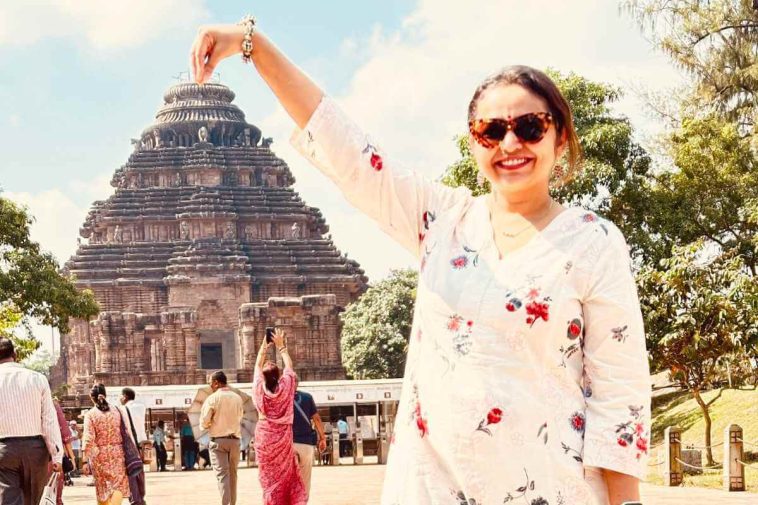
There are places in India that you visit, and then there are places that visit you — long after you have returned home. Konark is the second kind. The moment you walk through the gates of the Sun Temple complex and that enormous chariot of stone rises before you, everything else — the scorching Odisha sun, the hawkers calling behind you, the milling crowds — dissolves into a kind of reverent silence. You are standing before something 800 years old, and it has not lost an ounce of its power.
We made the trip from Puri on a beautiful October morning — the kind of day that reminds you why October is unanimously considered the best time to visit Odisha. Blue skies, a gentle coastal breeze, and crowds that were present but not overwhelming. What we got at the temple itself was something far more humbling than we expected — a reminder that our ancestors built things that make modern architecture look timid by comparison. If you are planning a trip to Odisha and wondering whether Konark deserves a full day of your itinerary — the answer is an unequivocal, non-negotiable yes.
Also Read: Discovering Tirthan Valley: A Hidden Gem in Himachal Pradesh
The Story Behind the Stone: A Brief History of the Konark Sun Temple
To stand before Konark without knowing its history is to look at a painting without a title. Once you know the story, every carved stone takes on a different weight.
13th Century CE · circa 1250 AD
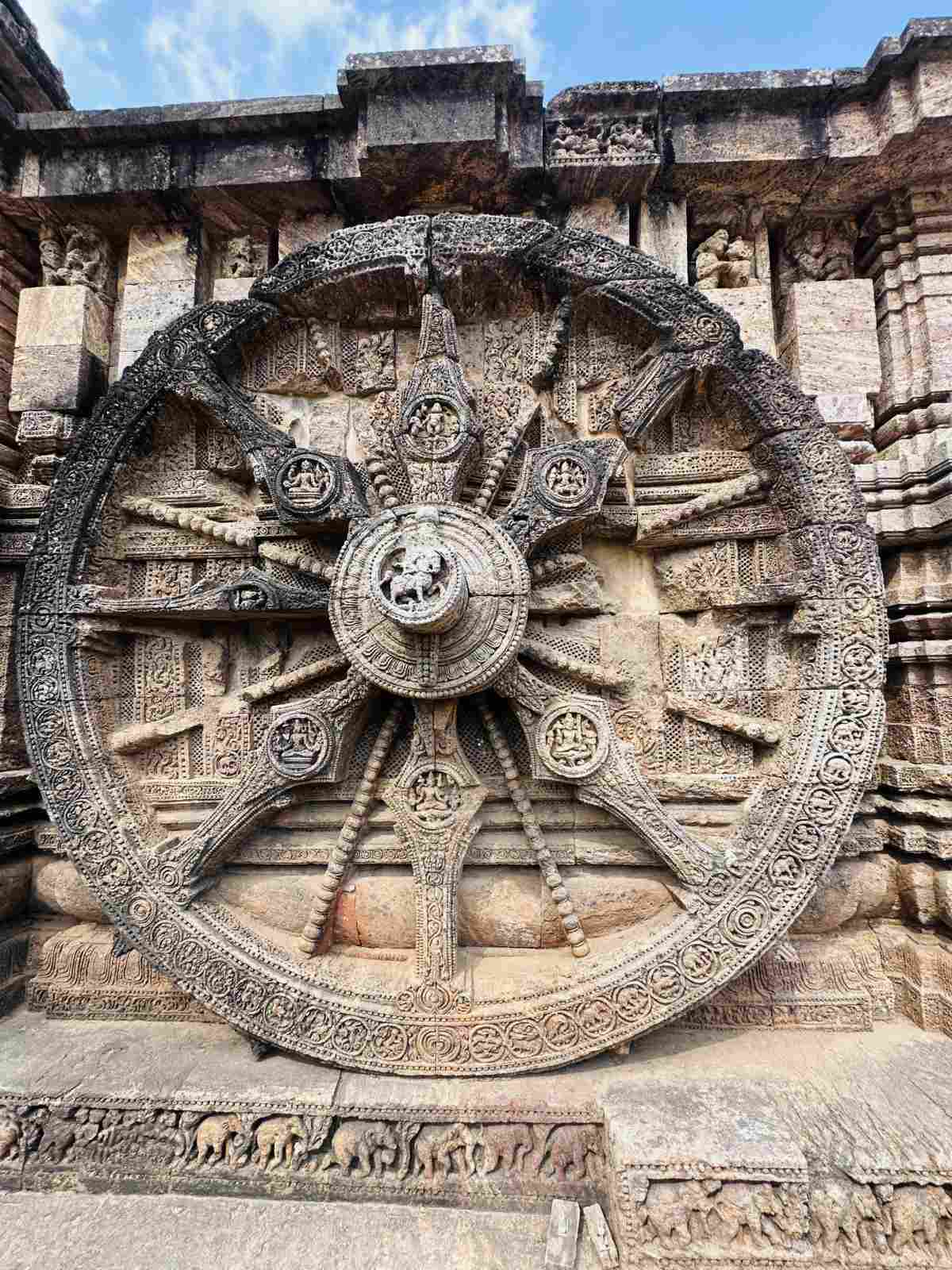
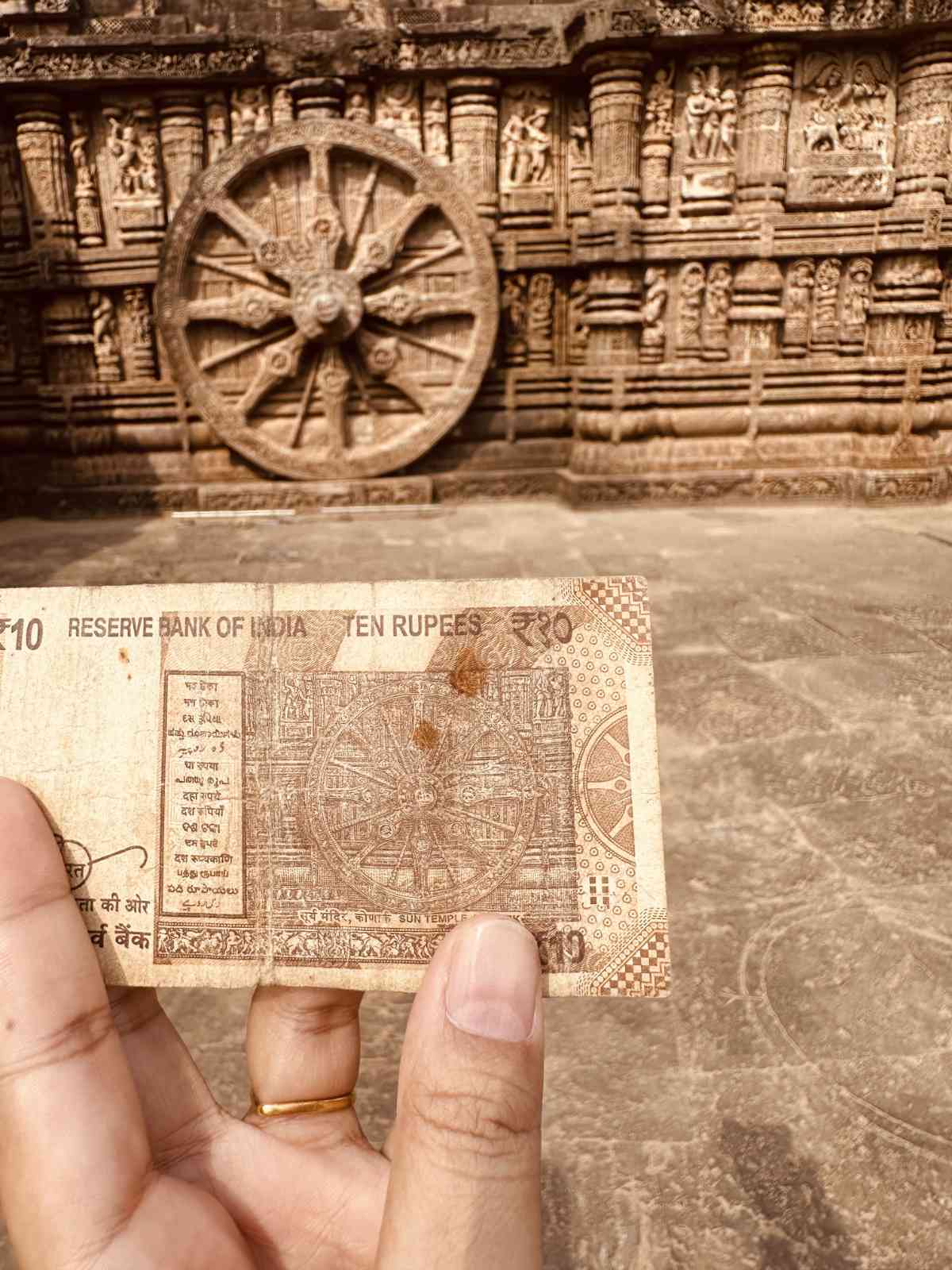
King Narasimhadeva I of the Eastern Ganga dynasty commissioned the temple. Legend says it took 1,200 artisans over 12 years to build — an act of devotion to Surya, the Sun God. The temple was designed as a colossal stone chariot with 24 elaborately carved wheels and 7 horses, representing the sun’s journey across the sky.
The Architecture
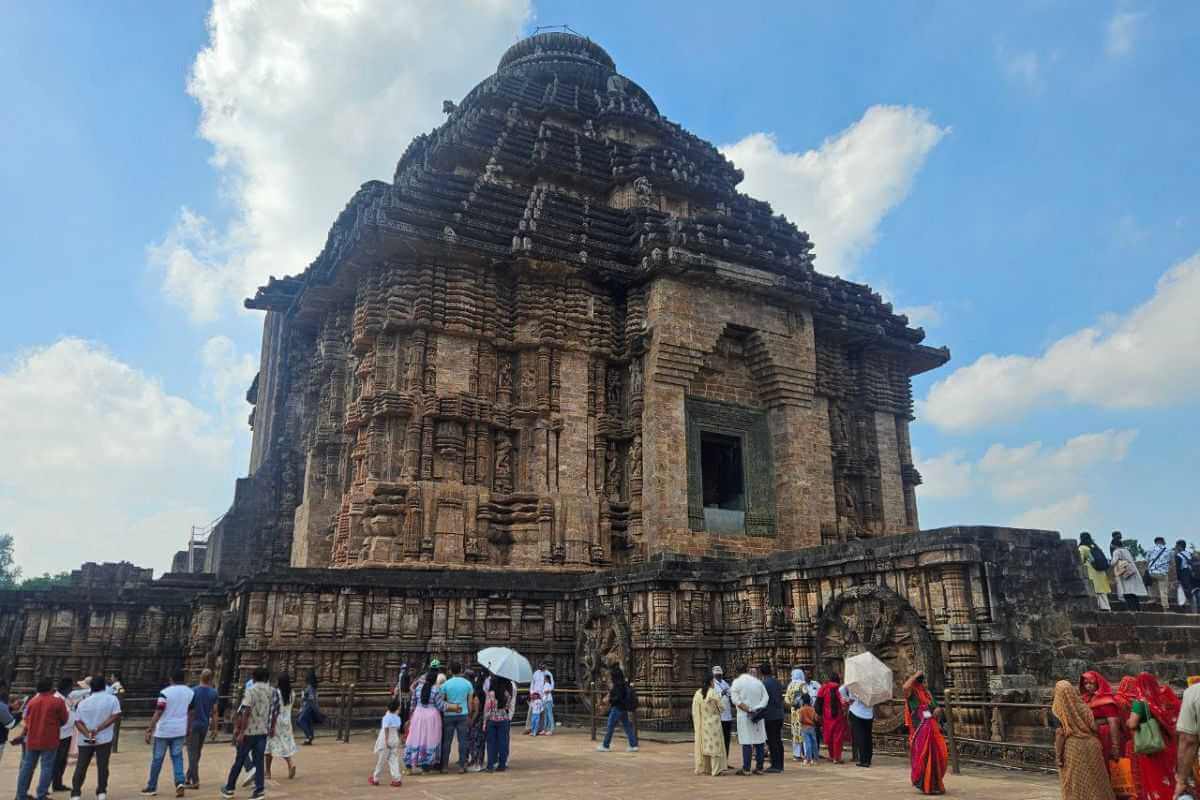
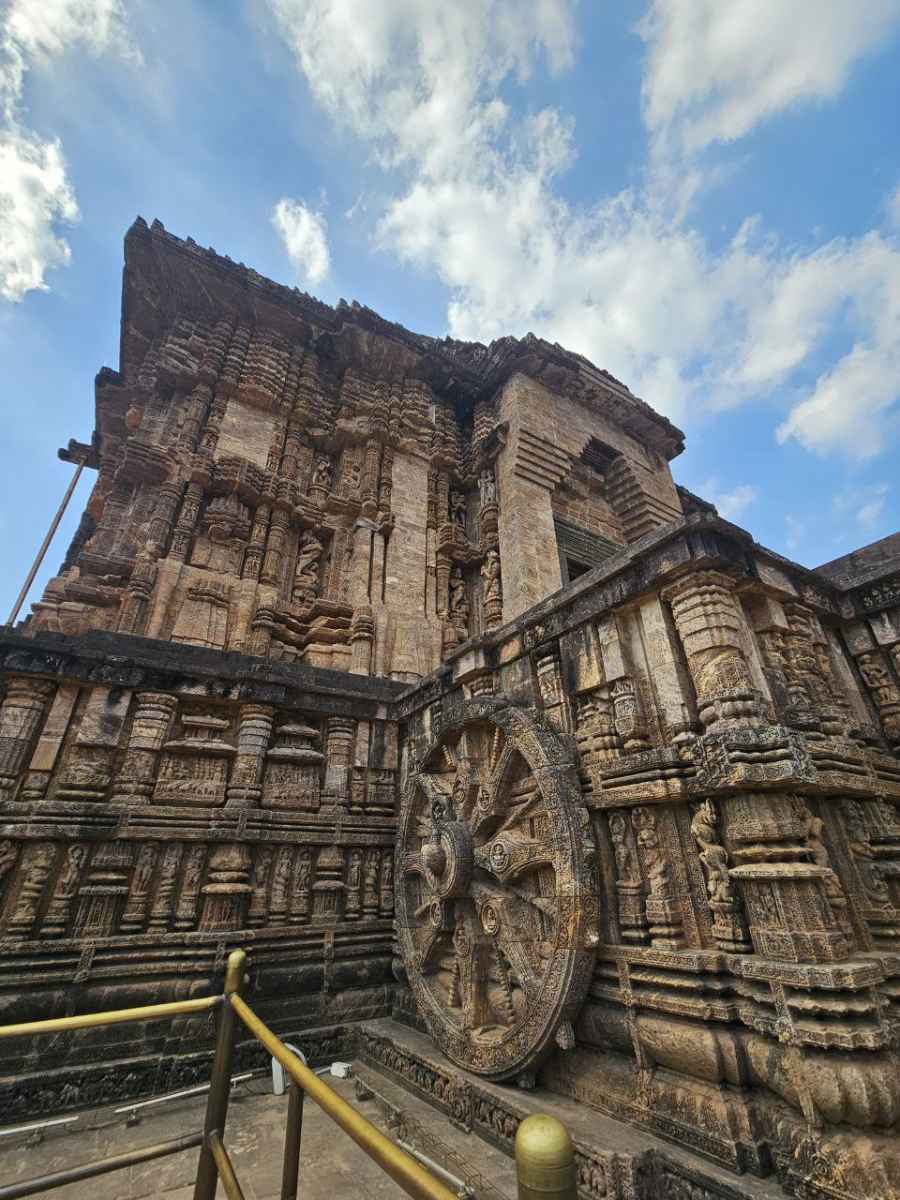
Built in the Kalinga style of temple architecture, Konark was originally much taller — its main shikhara (tower) is believed to have stood over 70 metres high before it collapsed, likely due to a combination of structural stress and foreign invasions. The Jagamohana (audience hall) that stands today is what visitors explore. The entire structure was conceived as a solar calendar — each of the 24 wheels has 8 spokes, and the spokes double as sundials, accurately indicating the time of day even today.
The Carvings
Every inch of the outer walls is covered in intricate sculpture — celestial musicians, dancers, elephants, mythological scenes, and the famously explicit erotic carvings that have fascinated and scandalised visitors for centuries. These are believed to represent the full spectrum of life and human desire — a theme echoed at Khajuraho as well. They are extraordinary works of art and deserve to be seen as such.
1984
UNESCO designated the Konark Sun Temple a World Heritage Site, placing it among the most protected and celebrated monuments on earth. Entry inside parts of the structure is now restricted to preserve what remains.
The Black Pagoda Legend
European sailors once called Konark the “Black Pagoda” because the dark stone could be seen from the sea and was used as a navigational landmark. The myth persisted that the temple contained a magnetic lodestone at its apex that drew iron ships off course — almost certainly untrue, but deliciously mysterious.
The 24 wheels on the temple walls are not just decorative — each spoke acts as a sundial, telling the time with startling accuracy even eight centuries after they were carved.
Getting There: Distance from Puri — and How to Get Here
Konark sits approximately 35 kilometres northeast of Puri, along one of the more scenic coastal drives you will find in eastern India. The road runs parallel to the Bay of Bengal for a good stretch — if you have time, roll down the windows and take it slowly.
By Car / Cab
- 35 km from Puri – around 45 minutes
- Most convenient. Cabs from Puri are readily available and affordable. Book a return trip — autorickshaws at Konark can be scarce.
By Bus (OSRTC)
- Regular state buses from Puri Bus Stand
- Budget-friendly but slower. Expect 1.5–2 hours and a somewhat crowded journey. Perfectly fine for solo travellers.
Nearest Airport
- Biju Patnaik, Bhubaneswar – 65 km
- About 1.5 hours from Konark. Many visitors combine Bhubaneswar, Puri, and Konark in a triangle trip over 2–3 days.
Nearest Railway Station
- Puri Railway Station – 35 km away
- Puri is well connected to most major Indian cities. From the station, take a cab or pre-paid taxi directly to Konark.
Practical Tip:
If you are staying in Puri, many hotels offer day-trip packages combining Konark, the Chandrabhaga Beach nearby (just 3 km from the temple), and a sunset stop on the way back. It is one of the better ways to structure the day, especially in summer when you want to limit your midday sun exposure at the temple.
Plan Your Visit: The Best Time to Visit Konark — And the Honest Truth About the Heat
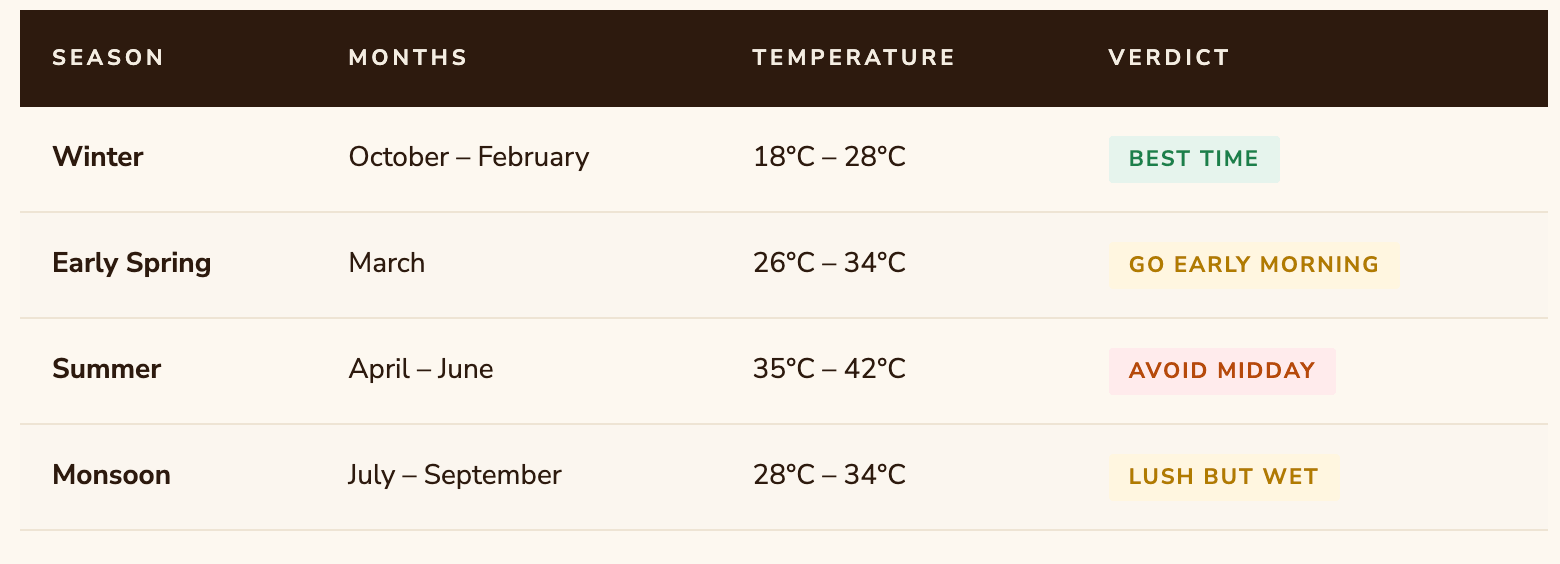
Let us be straightforward about something: Konark in summer is brutal — and even in shoulder seasons, the sun shows no mercy. We visited in October — technically the ideal window — and the weather was genuinely glorious. Blue skies, a pleasant breeze, and temperatures hovering around a comfortable 27–30°C. The stone plaza around the temple glowed in the warm October light, and we could actually linger and look without squinting or wilting. But we still carried sunscreen, and by noon, the sun reminded us exactly where we were.
Even in October, you will spot the umbrellas in the crowd — and they are not wrong to carry them. The open stone plaza has zero shade, and the midday sun on white stone is deceptively strong even in winter months. Our advice: a light cotton kurta set, good sneakers, and your sunglasses are non-negotiable regardless of when you go.
Arrive at Opening Time
The temple opens at 6am. Arriving at or just after sunrise is genuinely magical — the light on the honey-coloured stone is extraordinary, the crowds are thin, and the temperature is still bearable. By 10am, both the crowds and the heat intensify significantly.
Konark Dance Festival — December
Every December, the Konark Dance Festival is held at an open-air auditorium against the temple backdrop. Classical dance forms like Odissi, Bharatanatyam, and Kathak are performed over five evenings. If you can time your visit — do it. It is transcendent.
The Heat Is Real — Prepare
The open stone plaza has no shade at all. Even in October, sunscreen, a water bottle, and sunglasses are non-negotiable. In summer months (April to June), add a compact umbrella and electrolyte sachets to that list — it becomes genuinely brutal. Do not underestimate the Odisha sky regardless of season.
Photography Timing
The golden hour light at sunrise hits the eastern face of the temple beautifully — exactly as the ancient architects intended, since the temple faces east toward the rising sun. Afternoon light on the south side, where most of the famous wheels are, is equally dramatic.
What to Wear: Dressing Right for Konark — Practical and Respectful
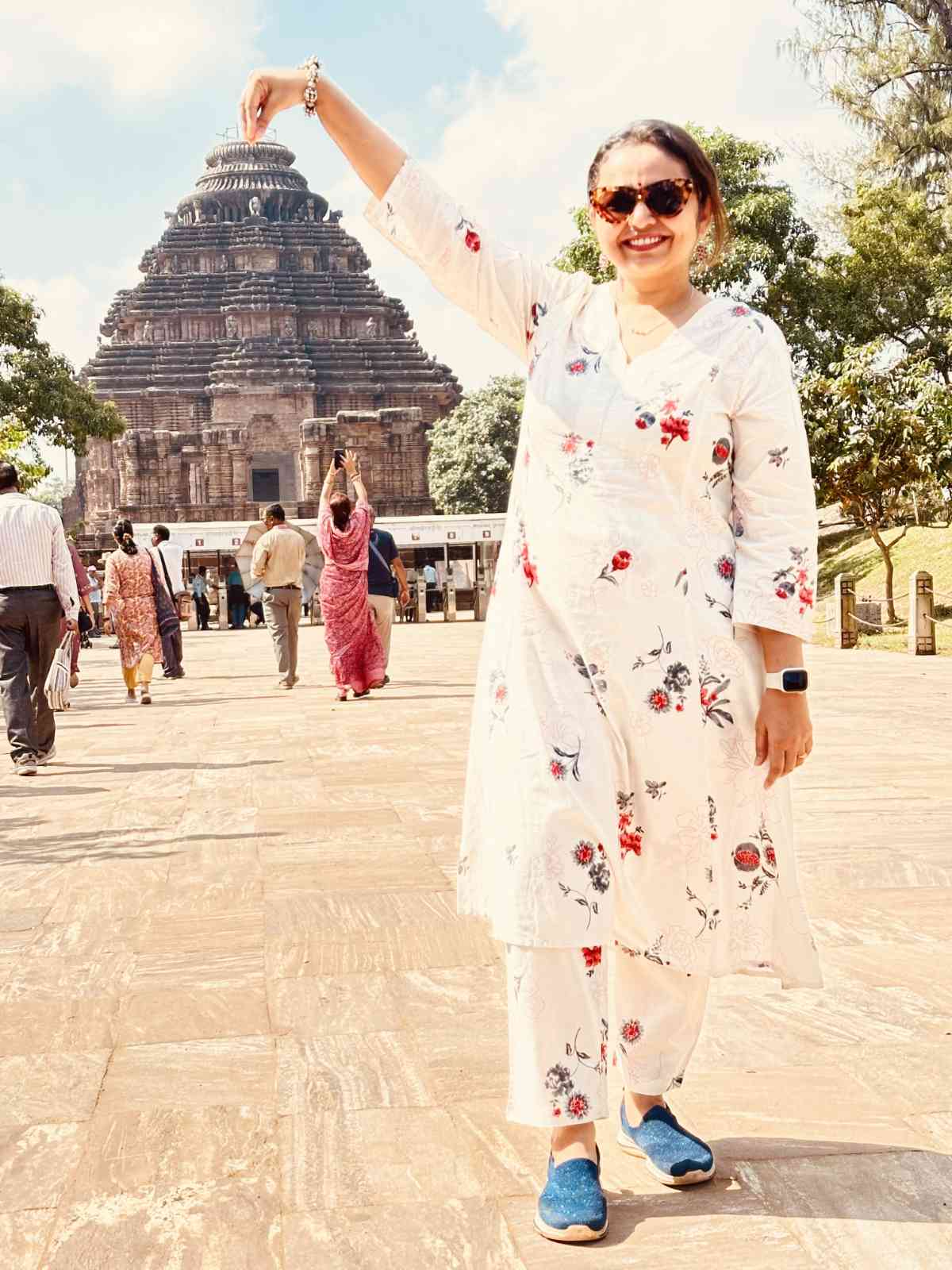
Konark is an ASI (Archaeological Survey of India) protected monument, not an active place of worship — so strict religious dress codes do not apply here. But what you wear absolutely matters for comfort, practicality, and respect. We wore a white floral cotton kurta set with comfortable slip-on sneakers and sunglasses — and it was genuinely the perfect choice. Breathable, easy to move in, appropriate, and cool enough for an October morning that warmed up quickly by noon. Here is our honest attire guide.
Wear This
- Light cotton or linen — breathable fabrics only. Synthetics will be genuinely miserable in the heat.
- Full-length or midi skirts, cotton palazzos, or light salwar suits for women — comfortable and culturally appropriate.
- Loose cotton shirts or kurtas for men — shorts are fine but long trousers are more comfortable on the hot stone.
- Comfortable, closed-toe footwear or sturdy sandals — the ground is uneven and can get extremely hot.
- A light dupatta or stole — doubles as sun protection for your neck and shoulders.
- A sun hat or cap — not optional in summer months.
- Sunglasses — the glare off the stone is intense.
Avoid This
- Sleeveless tops or revealing clothing — not prohibited but draws unnecessary attention and offers zero sun protection.
- Heels or wedges of any kind — the stone platforms and steps are uneven and the footing is tricky.
- Heavy jeans or dark colours — they absorb heat and you will be uncomfortable within minutes.
- Flip-flops with no support — you walk a significant distance and the ground is rough.
- White or very light fabrics if you plan to sit or touch the stone — the surface is dusty.
Don’t Miss This: The ASI Museum — The Underrated Gem Most Visitors Skip
This is the piece of advice that most travel guides gloss over — and it is possibly the most valuable thing we can tell you. Right outside the main temple complex, within the same ticketed compound, sits the ASI Archaeological Museum at Konark. Most visitors walk straight past it, eager to get to the main structure. Do not make that mistake.
The museum houses hundreds of original sculptures, carvings, and artefacts recovered from the temple site over the decades — pieces too fragile or too significant to remain exposed to the elements. Some of the erotic carvings here are more detailed than anything visible on the outer walls. There are chlorite stone statues, architectural fragments, inscriptions, and explanatory panels that give context to what you are about to see — or have just seen — outside.
Insider Tip
Visit the museum first, before the main temple. Understanding what the carvings represent — the different levels of the temple (earth, sky, celestial), the three Surya figures positioned to catch sunrise, noon, and sunset light respectively — transforms the experience of walking around the temple itself. You go from tourist to genuine appreciator. The museum is air-conditioned. On a hot day, this is also a practical blessing.
The Honest Bit: The Hawkers — What to Expect and How to Handle It
Let us talk about the thing every guidebook dances around politely: the hawkers at Konark are persistent. From the moment you step off your vehicle in the parking area to the moment you leave, you will be approached by vendors selling stone replicas of the temple wheel, sandalwood items, postcards, cold drinks, miniature chariots, and a variety of other souvenirs.
They are not aggressive, and the vast majority are simply people making a living in the only economy available to them around a major monument. A firm but polite “no thank you” is all that is needed, and almost always respected. What they are is persistent — so if you are someone who finds this kind of interaction draining, mentally prepare yourself in advance.
Decide Before You Go
If you want a stone replica wheel or a sandalwood carving as a souvenir — and they are genuinely beautiful — decide on a budget before you engage. Bargaining is expected and prices start much higher than the final accepted price. A small stone wheel that opens at Rs 500 will likely settle at Rs 150–200.
The Guide Offer
You will be approached by unofficial guides at the entrance. The ASI provides licensed guides at a fixed rate, and they are genuinely excellent — full of history and context. If you want a guide, go to the official booking counter inside the complex. Unofficial guides, however enthusiastic, are a mixed bag.
10 Things You Must Know Before Visiting Konark
Entry Fee: Rs 40 for Indians and Rs 600 for foreigners
ASI ticket includes temple complex and museum. Keep it — you may be checked multiple times.
Opening Hours
- 6:00 AM to 8:00 PM daily
- Open all days including public holidays. Sound & Light show held evenings — check timings locally.
Photography
- Permitted without charge
- Personal photography is free. No professional camera or drone permits without prior ASI clearance.
Climbing Restrictions
- Climbing the main structure is prohibited
- For preservation. The elevated platform and Jagamohana can be accessed on foot.
Water & Food
- Carry your own water — always
- Vendors sell water inside but at inflated prices. No food allowed inside the complex.
Time Required
- Minimum 2.5 hours, ideally 4 hours
- Include museum time. Rushing Konark is doing yourself a disservice.
Should You Go? Here Is Our Honest Answer.
Standing before the Sun Temple at Konark, you will feel two things almost simultaneously: a profound sense of awe at what human hands and human devotion can create — and a quiet, uncomfortable awareness of how much has been lost. The collapsed tower, the missing horses, the weathered faces of sculptures that were once crisp and clear — Konark carries its wounds openly. But that only adds to its power.
Go for the history. Go for the architecture. Go for the experience of standing inside a story 800 years old and feeling it wrap around you like warm stone. Go in October, if you can. Go at sunrise, if you can swing it. Take an umbrella. Visit the museum first. Bargain cheerfully with the hawkers. And give yourself more time than you think you need — because once you are there, you will not want to leave.
“Some places don’t just stand in history — they are history.” Konark Sun Temple is one of India’s greatest gifts to the world. Plan the trip. Make the time. You will not regret a single minute of it.