
 Smita Diwan
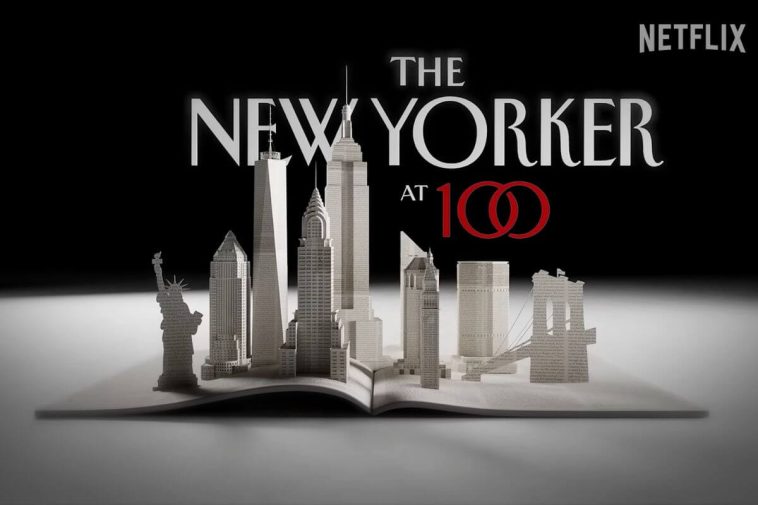
Recently, I watched Netflix’s The New Yorker at 100, a documentary that takes viewers inside one of the most respected magazines in the world. As someone who has always been drawn to journalism and has worked with news and media platforms including CNBC and Zoom TV, The New Yorker has always felt less like a magazine to me and more like an institution.
Also Read: Skies Over Kargil: Why Operation Safed Sagar Deserves a Place on Every Watchlist
So when I watched this documentary, I was completely fascinated.
Not simply because it is about a magazine that has survived for 100 years, but because of how it has survived.
In a world of AI, ChatGPT, Gemini, TikTok, Threads and endless scrolling, what does it take for a publication to continue believing that every word, every fact, every illustration and every story deserves enormous attention?
That is what stayed with me after watching The New Yorker at 100.
Why should you watch a documentary about a magazine?
You might wonder why anyone would want to spend nearly two hours watching a film about how a magazine works.
That was probably my first thought too.
But the documentary isn’t really about a magazine. It is about the people behind journalism the writers, editors, fact-checkers, cartoonists and artists who are still willing to spend an extraordinary amount of time getting a story right.
Directed by Marshall Curry and narrated by Julianne Moore, the documentary follows The New Yorker as its team works towards its 100th-anniversary issue, while also taking us through some of the defining stories, people and moments from the magazine’s history.And that is where it becomes fascinating.
The Editorial Room: Where Good Stories Get Better
As a journalist, I could relate to the editorial room. One of the things I enjoyed most was watching the editorial process.As a journalist, I could relate to that moment when you have an idea, take it to an editor, get questioned about it and then go back to the story again.
Except at The New Yorker, everything seems to be taken several levels deeper.
The writers aren’t simply trying to produce another article. They are trying to find the story that isn’t already sitting everywhere on the internet. That distinction really struck me.
The documentary follows several members of the current editorial team, including war correspondent Jon Lee Anderson , profile writer Rachel Syme and investigative reporter Ronan Farrow. We see them doing the difficult, sometimes uncomfortable work of reporting rather than simply sitting behind a computer and writing from material that is already available.
There is something incredibly old-fashioned about that, and I mean that as a compliment.
Go somewhere.
Meet people.
Ask questions.
Observe.
Listen.
Stay with the story.
And then write.
The Kind of Journalism You Don’t Find by Simply Searching Google
This was probably my biggest takeaway from the documentary.
We live in an age where information is everywhere. AI can summarise an article in seconds. Search engines can give you hundreds of results. Social media can tell you what everyone is talking about almost instantly.
Why Original Reporting Still Matters in the Age of AI
But information is not necessarily journalism. The documentary reminded me why original reporting still matters.There are stories that require someone to actually go there. To sit with someone. To spend days, weeks or sometimes much longer understanding a subject. To notice the detail that nobody else noticed. To ask the question nobody else asked. And then to fact-check the whole thing before it reaches the reader. That level of commitment is perhaps what impressed me most about the writers at The New Yorker.
The Hiroshima Story That Still Resonates
The Hiroshima story stayed with me
One of the historical stories that the documentary revisits is John Hersey’s famous “Hiroshima”, published in The New Yorker in 1946.
The piece documented the experiences of six survivors of the atomic bombing of Hiroshima and became one of the magazine’s most important pieces of journalism.
For someone interested in journalism, seeing how a piece like that continues to be remembered decades later makes you think about what actually makes a story powerful.
It isn’t simply breaking news.
It is the ability to make people understand an event through human experience.
And that is something that doesn’t become outdated.
The New Yorker’s Obsession With Fact-Checking
The obsession with fact-checking
If there is one thing I came away from the documentary thinking about, it is the extraordinary importance The New Yorker places on fact-checking.
Every detail matters.
Names matter.
Dates matter.
Words matter.
Context matters.
Even details that might seem insignificant are checked.
Watching this in the age of AI-generated content was particularly interesting to me. We are now surrounded by content produced at incredible speed. But speed and accuracy are not the same thing. The documentary shows a culture where getting something right is more important than getting it out quickly.
And honestly, I found that refreshing.
Françoise Mouly and the Art of The New Yorker Cover
Another part of the documentary I absolutely loved was the world of The New Yorker covers.
The cover isn’t treated as packaging for the magazine. It is treated as an important piece of visual storytelling.
Françoise Mouly, the magazine’s longtime art editor, has been shaping its visual identity since 1993. She works with artists and presents cover ideas that have to work both as art and as a reflection of the cultural moment.
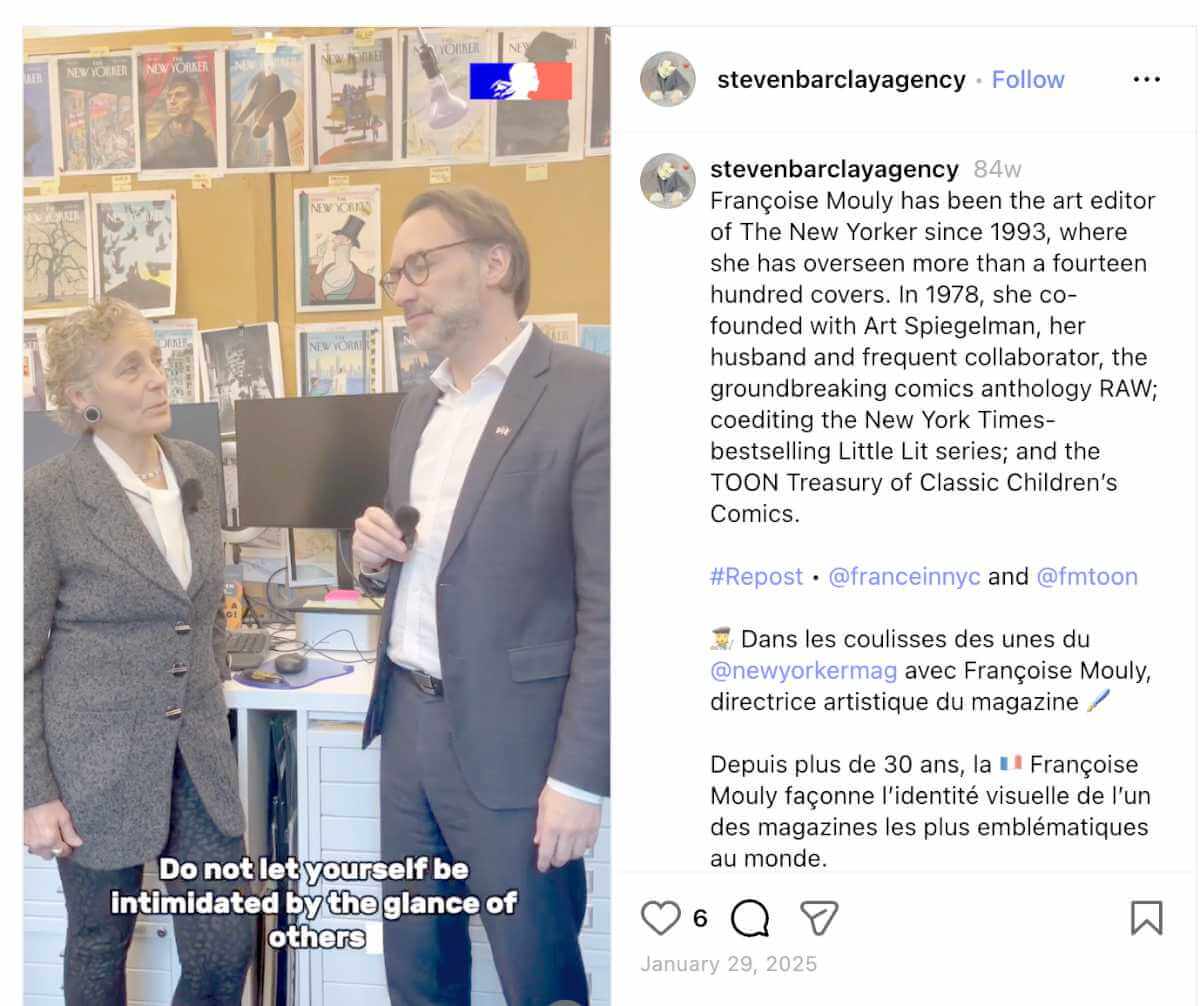
https://www.instagram.com/reel/DFaf5mXPC4p/?hl=en
I found this fascinating because a New Yorker cover can often communicate an entire idea without explaining it.
It can be political.
Funny.
Subtle.
Beautiful.
Uncomfortable.
Sometimes all at once.
That is when art meets journalism.
And perhaps that is one of the reasons the covers have become so recognisable around the world.
When Cartoons Become Journalism
And then there are the cartoons
The cartoon section is another reminder of how seriously the magazine takes its craft. The documentary gives us a glimpse into the cartoon selection process, including the work of cartoon editor Emma Allen and longtime cartoonist Roz Chast. What looks effortless to the reader is anything but effortless behind the scenes. I think that happens with great creative work in general.
When you see the finished product, you don’t see the hundreds of decisions that came before it.
The New Yorker Before the Era of Doom-Scrolling
There is also a lovely nostalgic thread running through the documentary. People talk about discovering The New Yorker, carrying it around, subscribing to it and seeing it as a sign that someone was a serious reader.
Sarah Jessica Parker is among the celebrities who appear in the documentary, alongside other contributors and admirers including Molly Ringwald, Jon Hamm, Ronny Chieng and Jesse Eisenberg.
And this made me think about how dramatically our reading habits have changed.
Today, we scroll.
We swipe.
We move from one video to another.
We rarely sit with one piece of writing for an hour.
We don’t always finish the article we started.
And yet The New Yorker has managed to build a readership around the idea that some stories are worth slowing down for.
That is quite an achievement.
How a Magazine Became a Cultural Institution
A magazine that became an institution
What I found most interesting about The New Yorker at 100 is that it doesn’t simply celebrate the magazine’s past. It asks why it still matters.
The magazine began in 1925 under founding editor Harold Ross. A century later, David Remnick remains its editor, a position he has held since 1998. The publication has moved from print into the digital world without completely abandoning the editorial values that made it famous in the first place.
That, to me, is the real story.
Surviving 100 Years Is Impressive. Staying Relevant Is Harder.
Surviving 100 years is impressive.
But remaining relevant for 100 years is much harder.
Would I recommend The New Yorker at 100?
Absolutely.
Especially if you work in journalism, media, writing, publishing, entertainment or any creative field.
But even if you don’t, I think there is something to learn from it.
The documentary made me think about the difference between creating content and creating something worth reading.
It reminded me why original reporting matters.
Why editing matters.
Why fact-checking matters.
Why visual storytelling matters.
And why sometimes the best work happens when people care almost obsessively about the details.
For me, The New Yorker isn’t simply a magazine after watching this documentary.
It is an institution built around an idea that feels increasingly rare today:
Take your time. Go deeper. Check everything. And make the work worth the reader’s time.
As someone who has spent years around journalism and media, that was probably my favourite part of The New Yorker at 100.
And yes, after watching it, I understood a little better why this magazine has made it through a century and why it is still here in the age of AI and doom-scrolling.
I am still thinking about it.
You might too.
The New Yorker at 100: At a Glance
Documentary: The New Yorker at 100
Where to watch: Netflix
Release date: December 5, 2025
Director: Marshall Curry
Narrator: Julianne Moore
The New Yorker editor: David Remnick
Art editor: Françoise Mouly
Runtime: 1 hr 37 min