
 Smita Diwan
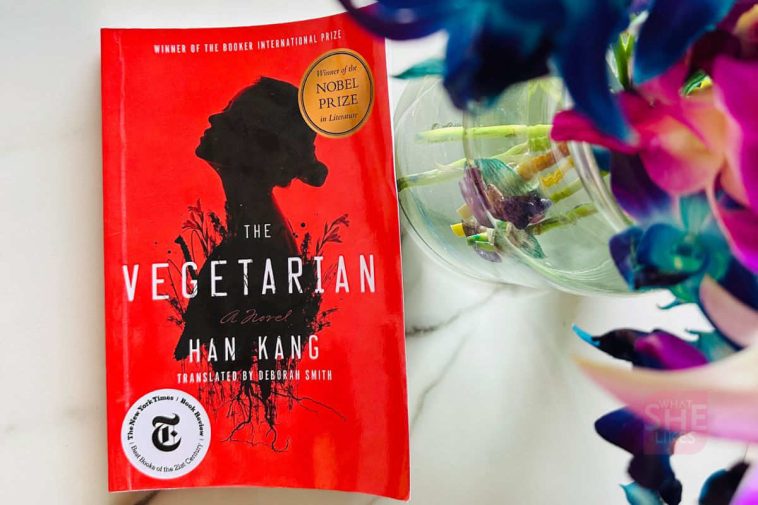
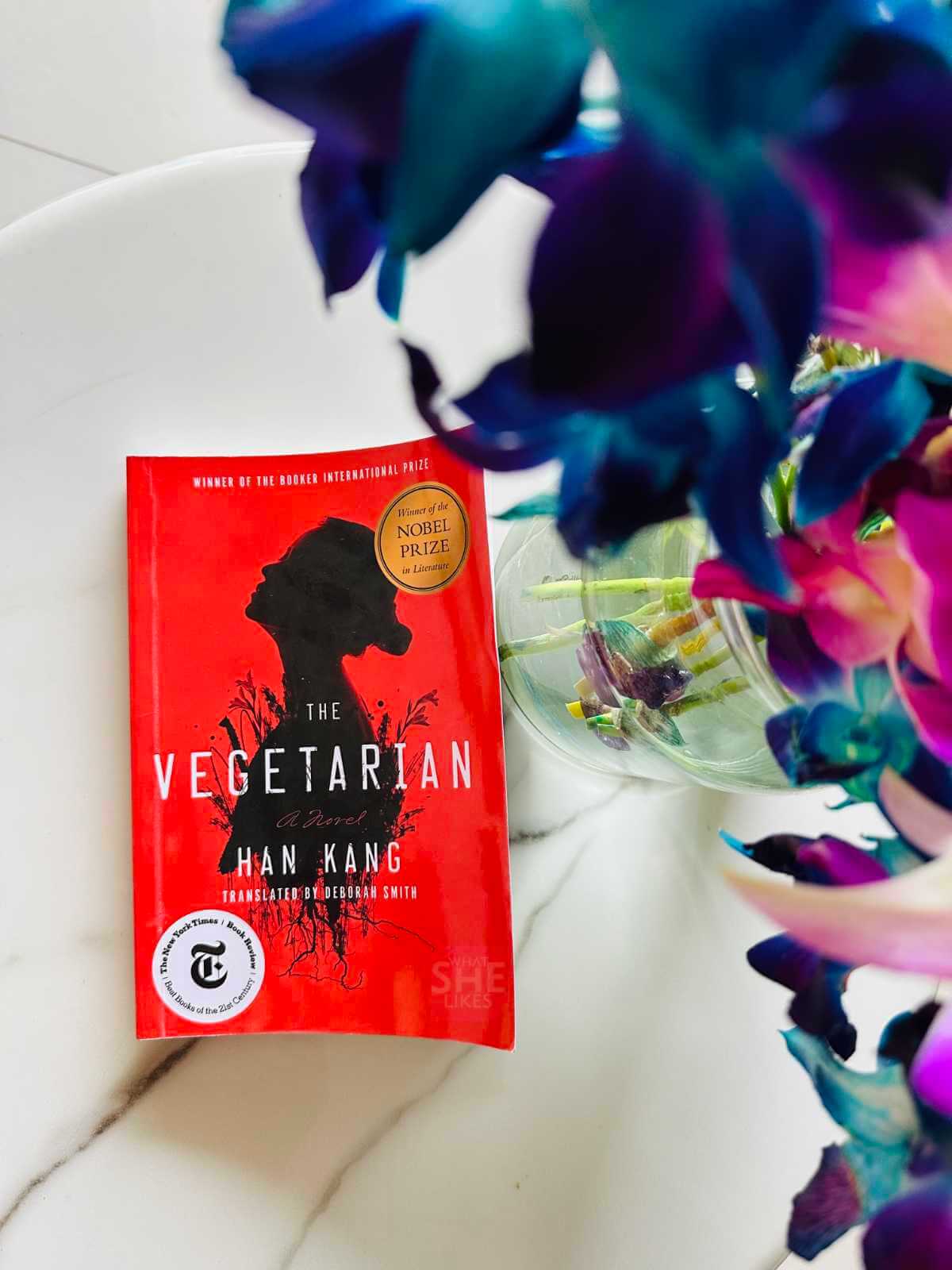
Han Kang’s The Vegetarian has become a global phenomenon, a book that first earned the International Booker Prize and in 2024 elevated its author to the Nobel Prize in Literature for her intense poetic prose that confronts historical traumas and exposes the fragility of human life. Born in 1970 in South Korea, Han Kang is also the author of Human Acts, The White Book, Greek Lessons, and We Do Not Part, but The Vegetarian remains the work that continues to shock, move, and unsettle readers across the world. The novel, translated into English by Deborah Smith, unfolds in South Korea where eating meat is central to daily life and a woman’s decision to refuse it creates ripples that transform every relationship around her.
Also Read: Manifest Book Review – Roxie Nafousi’s Guide to Living Your Best Life
Yeong-hye’s Quiet but Radical Rebellion
At the heart of the story is Yeong-hye, a timid, dutiful, almost invisible woman in her marriage and family. Without warning, after a disturbing dream, she announces she will no longer eat meat. In a country where vegetarianism is rare and often misunderstood, this simple act of personal choice becomes a radical form of rebellion. For Indian readers, where vegetarianism is normalized and often tied to culture or religion, Yeong-hye’s story is a reminder of how food choices can become deeply political and intensely personal in other parts of the world.
When Family Becomes the First Battleground
Her husband, Mr. Cheong, is baffled and increasingly humiliated by her refusal to conform. Used to a quiet, obedient wife who manages his home without fuss, he sees Yeong-hye’s vegetarianism not as an act of personal will but as a direct attack on his social respectability. At work dinners, she becomes the subject of ridicule, and at home, her refusal to cook meat fuels his frustration. When he confides in her family, the situation worsens. Yeong-hye’s father, a violent patriarch, tries to force meat down her throat, triggering her most defiant act slitting her wrist at the dinner table. This moment shifts the story from quiet domestic unease to something darker and far more tragic, revealing the depth of Yeong-hye’s inner torment and her family’s inability to listen to her voice.
Desire, Exploitation, and the Body as Canvas
The novel is divided into three parts, each told from a different perspective, and this structure gives us shifting lenses through which to understand Yeong-hye’s transformation. The second part is narrated by her brother-in-law, an artist and In-hye’s husband, whose obsession with Yeong-hye leads him into morally disturbing territory. Fascinated by the Mongolian mark on her body, he projects his own artistic desires onto her, painting her body with flowers and ultimately seducing her in the name of art. Their encounter is not an act of love but an exploitation of Yeong-hye’s fragility, yet she submits with a strange passivity, her sense of self already eroded by her alienation from the world around her. When In-hye discovers them together, her marriage collapses, further fracturing the already broken family.
Also Read: Book Review: Feminist Movements in India
In-hye’s Voice and the Question of Freedom
The final part belongs to In-hye, Yeong-hye’s elder sister, who becomes the emotional anchor of the narrative. In-hye reflects on her own life of compromises, her failed marriage, her loneliness, her survival in a patriarchal society and wonders if Yeong-hye’s breakdown is in fact a form of freedom she herself never allowed. By this time, Yeong-hye has retreated fully into her inner world, convinced she is becoming a tree, surviving only on water and light. Hospitalized and emaciated, she is determined to shed her human form and her human obligations. The closing scenes are devastating yet poetic, leaving readers uncertain whether she will live or die, but certain that she has crossed a threshold no one around her can follow.
Poetry, Trauma, and the Power of Han Kang’s Prose
What makes The Vegetarian extraordinary is not just its plot but its language. Han Kang writes in a lyrical, rhythmic prose that reads like poetry even in translation. The imagery of dream sequences filled with blood, forests, and animal flesh lingers in the mind long after the book is closed. The novel is not just about vegetarianism; it is about desire, resistance, trauma, and the cost of non-conformity for women in a society that demands silence and obedience. Yeong-hye’s quiet rebellion exposes the cruelty of a world where a woman’s smallest act of choice can unravel her identity, her marriage, her family bonds, and ultimately her sanity.
Why The Vegetarian Resonates with Indian Readers
For women readers, especially in India, The Vegetarian resonates on multiple levels. While the cultural context is South Korean, the dynamics of patriarchy, family pressure, and the invisibility of women’s choices feel familiar. The novel invites us to ask: how much of ourselves do we sacrifice in the name of conformity, and what would it take to reclaim that self, even at the risk of being called mad? Yeong-hye’s descent may appear tragic, but it is also a mirror held up to every woman who has ever been silenced, misunderstood, or reduced to her roles as wife, daughter, or mother.
Though first published in Korean in 2007, the novel gained international attention after its English translation in 2015, and its power has only grown since. Today, with Han Kang’s Nobel Prize, The Vegetarian is more relevant than ever. It is not a light read it is disturbing, unsettling, and at times unbearably raw but it is also necessary. It challenges readers to confront uncomfortable truths about gender, desire, and the fragile boundaries between sanity and madness.
For Indian readers curious about global feminist literature, The Vegetarian is a must-buy. Its current Indian edition is available for around Rs 450–Rs 550 depending on the retailer, making it an accessible investment for a book that has already shaped contemporary world literature.
In summary, The Vegetarian is not just a story about a woman who refuses meat. It is a story about a woman who refuses everything that consumes her family, society, desire, and even life itself. Yeong-hye’s journey from silence to defiance to ultimate withdrawal is at once horrifying and liberating. With unforgettable characters like Mr. Cheong, the controlling husband; In-hye, the conflicted sister; and the brother-in-law who exploits Yeong-hye’s fragility, Han Kang constructs a world that is as intimate as it is universal. For any woman reader seeking a book that shakes, stuns, and lingers in the psyche, this Nobel-winning novel is not one to be missed.