
 Smita Diwan
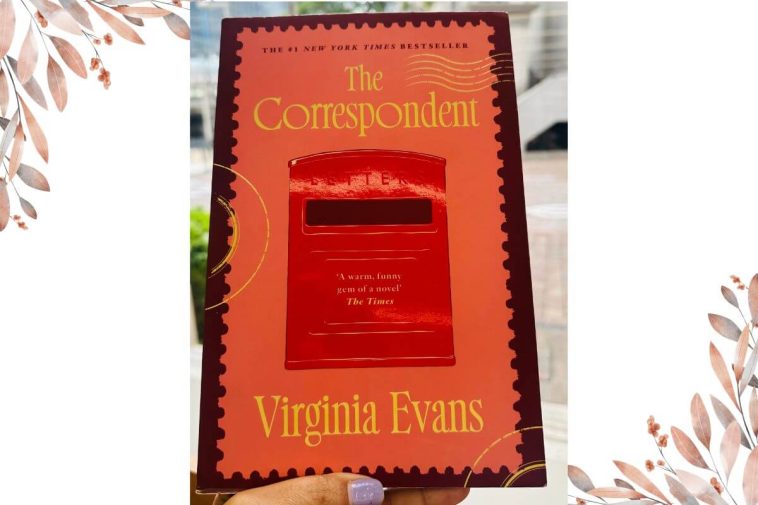
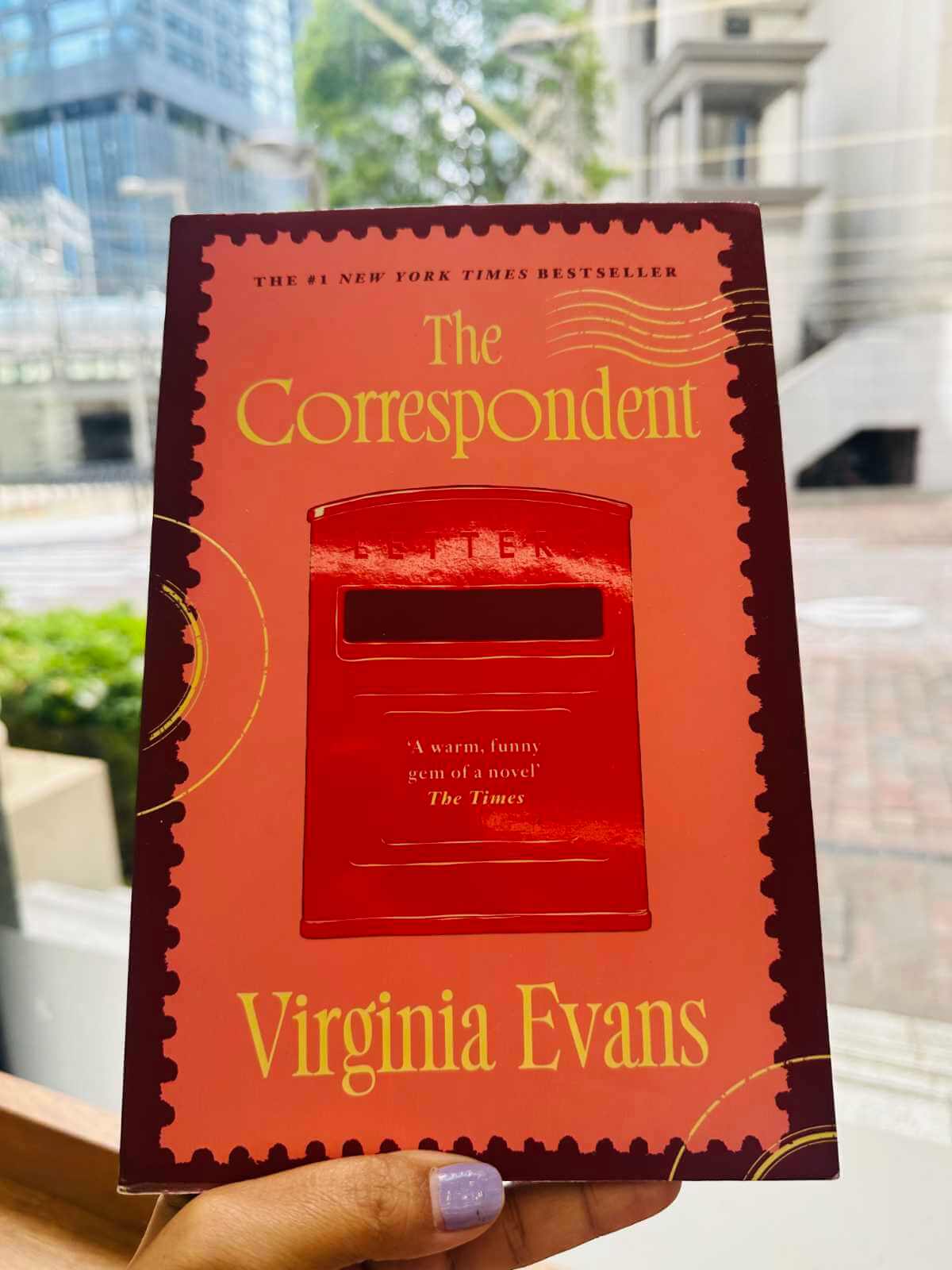
Some novels announce themselves with dramatic twists, sprawling family sagas, or unforgettable opening lines. Others enter our lives more gently. They don’t demand attention; they earn it. The Correspondent by Virginia Evans belongs to the second category. It is a novel that whispers rather than shouts, yet by the time you reach the final page, its voice has become impossible to ignore.
I picked up The Correspondent expecting a novel built around letters a familiar literary device that has produced countless memorable stories. What I didn’t expect was how deeply it would explore the emotional architecture of human relationships. This is not merely a story about correspondence. It is about what letters reveal, what they conceal, and why some of the most meaningful conversations in our lives happen only after we have the courage to write them down.
In an age dominated by instant messages, disappearing stories, and hurried communication, Virginia Evans reminds us that a letter is more than a form of communication. It is an act of reflection. It asks us to pause before speaking, to choose words carefully, and to confront feelings that everyday conversations often avoid. That simple premise becomes the foundation for a remarkably moving novel.
The Beauty of Slowing Down
One of the greatest strengths of The Correspondent is its pace.
Modern fiction often feels pressured to entertain every few pages. Readers have become accustomed to cliffhangers, shocking revelations, and relentless momentum. Evans chooses a different path. She trusts that emotional truth can be just as compelling as dramatic action.
The novel unfolds gradually, almost like opening an old wooden box filled with letters collected over decades. Every piece of correspondence reveals another fragment of a life—sometimes joyful, sometimes heartbreaking, often beautifully ordinary.
That ordinariness is precisely what makes the novel extraordinary.
Life itself rarely follows the rhythm of a thriller. Most of our defining moments happen quietly: a difficult apology, an overdue thank-you, an unanswered question, a conversation we wish had gone differently. Evans understands this. Rather than constructing elaborate plot twists, she builds emotional resonance through small moments that feel unmistakably real.
Letters Become Mirrors
At its heart, The Correspondent explores a fascinating idea: every letter tells two stories.
The first is the story the writer intends to tell.
The second is the story they reveal without realizing it.
As readers move through the novel, it becomes increasingly clear that words carry invisible weight. A carefully chosen phrase can expose vulnerability. A missing sentence can reveal regret. Even silence becomes meaningful.
Virginia Evans demonstrates an impressive understanding of human psychology. Her characters rarely announce exactly how they feel. Instead, their emotions emerge through hesitation, revisions, formal greetings, affectionate closings, and the subtle gaps between what is written and what remains unsaid.
It reminded me that communication is never only about language. It is also about timing, courage, memory, and fear.
Characters That Feel Like Real People
One of my favourite aspects of the novel is the authenticity of its characters.
Nobody exists simply to move the plot forward.
Every individual feels as though they have lived an entire life beyond the pages of the book. Their hopes, disappointments, insecurities, and relationships possess remarkable depth without ever becoming melodramatic.
Virginia Evans understands that people are complicated.
They can be generous and selfish within the same conversation.
They can love deeply while still making painful mistakes.
They can spend years searching for the right words and still never feel they’ve said enough.
Those contradictions make the characters believable.
As I read, I wasn’t analysing fictional personalities. I was reminded of people I know family members who struggle to express affection, friends who hide disappointment behind politeness, and even moments in my own life when writing something down felt easier than speaking it aloud.
That emotional familiarity is one of the novel’s greatest achievements.
Memory, Regret, and the Weight of Time
Another theme running beautifully through The Correspondent is time.
Letters preserve moments that conversations cannot.
A spoken sentence disappears into memory, but a letter remains.
It waits patiently to be rediscovered years later, carrying emotions across decades.
Evans explores how memory changes over time. The past is never presented as fixed or objective. Instead, characters revisit earlier events with new understanding, recognizing details they once overlooked.
This made me think about how often we rewrite our own personal histories.
The older we become, the more our memories evolve—not because facts change, but because we do.
The novel captures that emotional truth with remarkable sensitivity.
A Celebration of Thoughtful Communication
Reading The Correspondent also made me reflect on the way technology has transformed human connection.
Today, communication is constant but often shallow.
We send dozens of messages every day, yet meaningful conversations sometimes become surprisingly rare.
Letters demand something different.
They require patience.
They require vulnerability.
Most importantly, they require intention.
Evans never criticizes modern technology outright. Instead, she gently reminds readers of something we’ve perhaps forgotten: slowing down allows us to understand both ourselves and others more deeply.
That message feels especially valuable in today’s fast-moving world.
Elegant Without Becoming Pretentious
Virginia Evans writes with quiet confidence. Her prose is graceful without calling attention to itself. She doesn’t rely on elaborate metaphors or overly decorative language. Instead, she allows carefully observed details to carry emotional significance.The writing trusts readers to notice these details without explaining every feeling explicitly. As someone who enjoys literary fiction, I appreciated this restraint immensely. The novel never feels eager to impress. Instead, it simply tells its story with honesty and compassion.
Why You Should Read The Correspondent
Not every book changes the way we look at the world. Some change the way we look at ourselves.
The Correspondent belongs firmly in the second category. If you enjoy novels driven primarily by action, this may not be your ideal choice. Its pleasures are quieter and more reflective. It rewards patience rather than speed.
But if you appreciate beautifully observed characters, emotionally intelligent storytelling, and books that continue to occupy your thoughts days after you’ve finished reading, this novel deserves a place on your bookshelf.
More than anything else, The Correspondent reminds us that every relationship is built on communication and that communication is rarely perfect. We misunderstand people we love. We postpone difficult conversations. We carry words inside us for years because we cannot find the courage to say them aloud.
Virginia Evans captures those universal experiences with remarkable empathy.
By the final page, I wasn’t thinking about the individual letters anymore. I was thinking about the people in my own life. The conversations I still need to have. The gratitude I haven’t fully expressed. The apologies that remain unwritten.
Few novels inspire that kind of quiet self-reflection.
That is why I believe The Correspondent is worth reading. It doesn’t simply tell a story; it invites readers to reconsider the conversations that shape their own lives. In a literary landscape often driven by spectacle, Virginia Evans has written something rarer a novel that finds profound meaning in ordinary human connection.
And perhaps that’s its greatest achievement. It reminds us that sometimes the most important words are not the ones spoken in the heat of the moment, but the ones carefully chosen, thoughtfully written, and bravely sent.